Serepok waterfalls
The wide cascade on the Serepok, then the island lake, the lawful caves, and the short stops out of Gia Nghia.
One hired car or motorbike covers the loop. Dray Sap and Ta Dung are different days. Evenings in Gia Nghia are quiet: this is festival and gong country, not a bar street.
The wide sheet
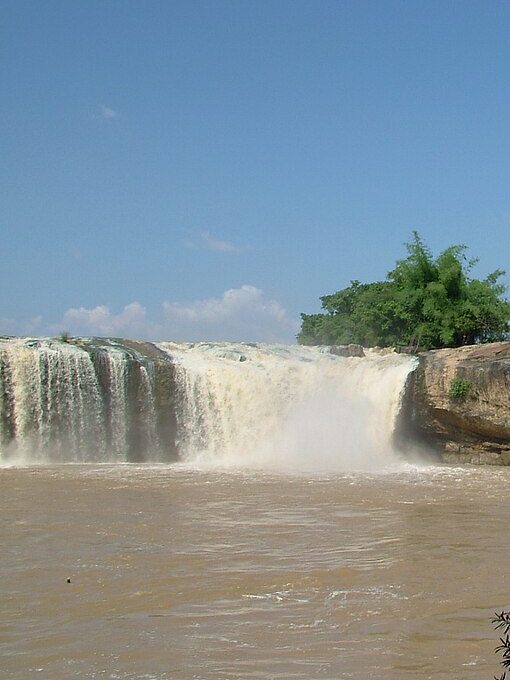
Dray Sap spreads about 100 metres across and drops about 12 metres through primary forest. The eco-site is in Dak Sor, Krong No, about 110 km from Gia Nghia, with Gia Long and Trinh Nu falls in the same cluster. Listings give 07:30–18:00 for the cluster; there is no official ticket page.
Ta Dung
Ta Dung is the Dong Nai 3 reservoir at Dak Som and Dak Plao, about 45 km southeast of Gia Nghia on QL28. Its wooded islands are why people call it the highlands’ Ha Long Bay. Entry to the park is free; boats and resorts sell their own tickets. Granite waterfall sits in the same park. Do not treat the lake as a same-day add-on from Da Lat.
Lawful caves only
Krong No banned self-guided entry to the lava tubes, C7 included, after deaths. Go with an authorized guide. C9, also called Hang Doi, near Chu Bluk, is a 217-metre tube with free entry; settle the guide’s fee before you go in. Nam Kar is a roadside scoria cone on QL28 between Gia Nghia and Krong No.
Sound, stone, and the longhouse
EXPLORASOUND, on Dak Nur hill in Gia Nghia, is Vietnam’s first sound museum. The Dak Kar lithophone hall is about 9 km from central Gia Nghia on QL28 toward Da Lat, in Dak Nia, and its stones are nearly 3,000 years old. Buon Buor, in Tam Thang, Cu Jut, is about 90 km toward Dak Lak: Ede longhouses, weaving, and gongs on the Serepok. Lieng Nung, about 9 km from Gia Nghia, is the 35-metre fall inside a basalt vault.