Dry pho Phở khô
Breakfast comes as two bowls: sun-dried rice noodles tossed with meat and a salty-sweet fermented black soybean sauce, and a clear, sweet bone broth to sip between bites. Lime and chili add a sour, spicy lift.
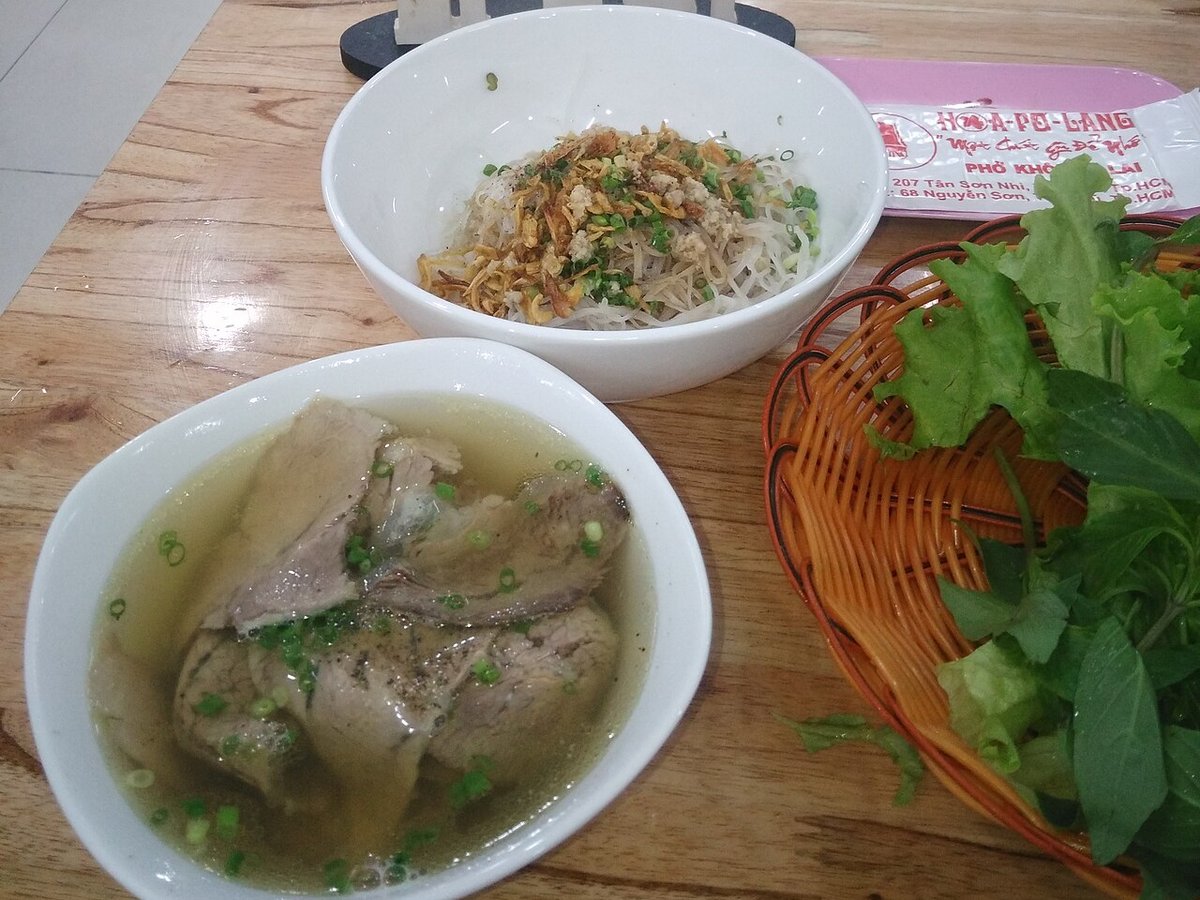 Food tours Dry pho
Search a food tour or a cooking class for this dish.
Search on KlookHistory
The dried noodle traces back to Pleiku, where an order of dry chicken phở at Nguyễn Thành Mỹ’s Đại Hưng restaurant on Hoàng Diệu arrived as two bowls around 1959. The first highland noodle workshop is credited to Hầu Tắc Cái and Hứa Thị Thủy on Bà Triệu. From Gia Lai the dish spread to Kon Tum, and it was recognized for Asian culinary value in 2012.
Taste
The dry bowl is the black sauce, the fat of the meat, peanuts, and crispy pork or fried shallots. The broth is clear and sweet from bones, without the cinnamon, star anise, and cardamom of northern phở.
How to enjoy it
Toss the dry bowl with its sauce and toppings, season it with lime, chili, or fish sauce, then alternate a bite of noodles with a sip of hot broth. Many people add blanched bean sprouts and raw herbs.
Choose chicken, shredded or sliced, or thin beef, sometimes with small minced-beef balls. Bean sprouts, lettuce, basil, and coriander come on the side. Eat it hot, before the noodles cool.
Where to try it
Around Kon Tum market and the central streets, including Phan Chu Trinh, Phan Đình Phùng, and Tô Hiến Thành. Most shops serve from about 6:00 to 10:00.