Com poi Cơm pồi
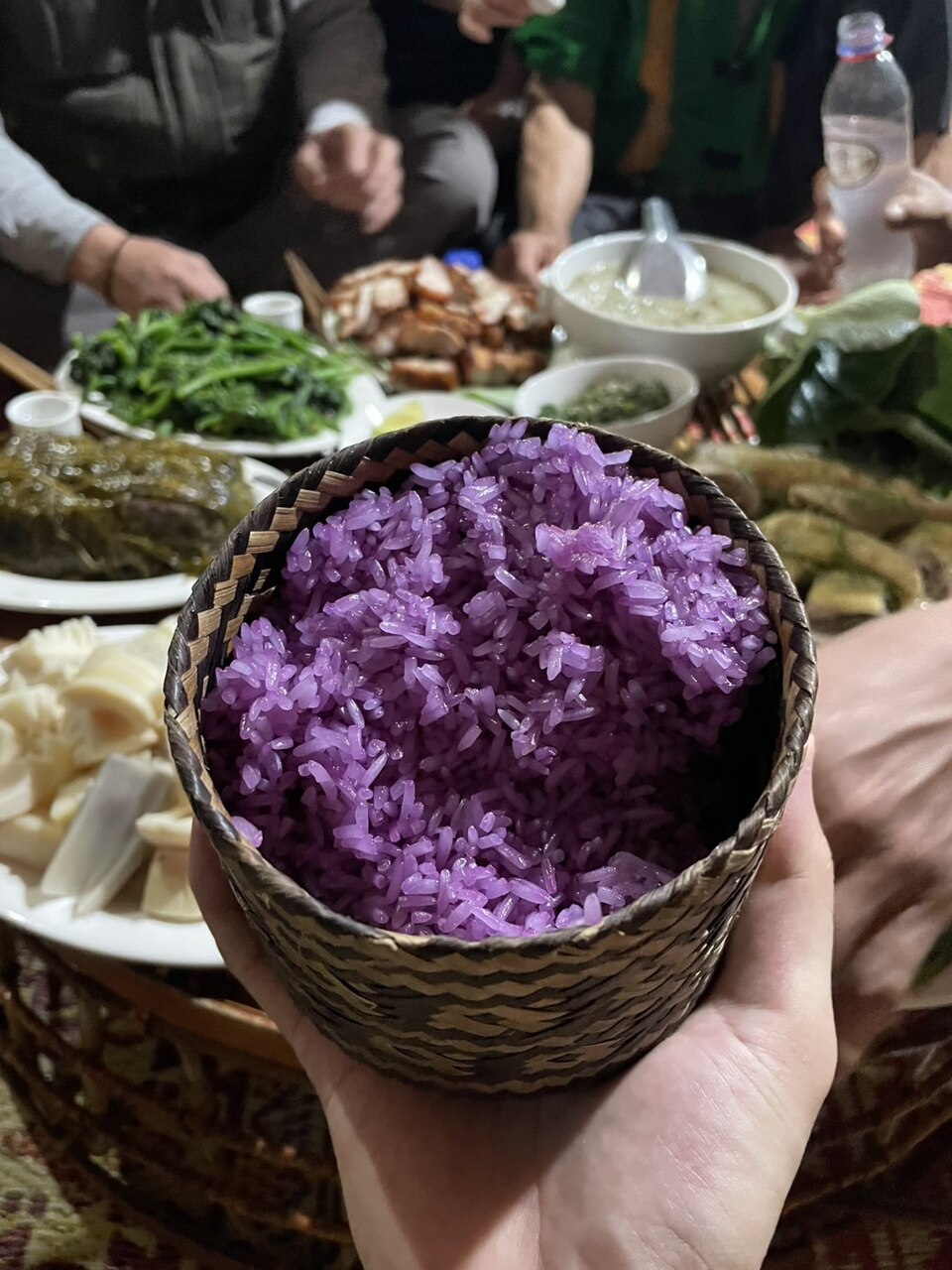
Cơm pồi is the corn-and-cassava staple of Chứt and Nguồn kitchens around the park, pounded, steamed, and eaten with a vegetable soup of fish and snails, or with salt, chili, and lime leaves. Some cooks add upland sticky rice and roast it in bamboo over charcoal, and some spell it cơm bồi.
 Food tours Com poi
Search a food tour or a cooking class for this dish.
Search on KlookWhy it matters
It belongs to Chứt village life, custom, and festivals, and it is also a Nguồn dish with ốc vặn and ốc núi.
Texture
Steamed, the corn and cassava turn airy. Roasted in bamboo, it takes the scent of the bamboo skin and the chew of sticky rice.
Sliced and steamed as cơm bồi, it is yellow and fragrant.
Taste
Rich with corn and cassava, and lightly sweet.
How to enjoy it
In the steamed version, corn and cassava are pounded and take the shape of the steamer. At a family meal it is rolled into small balls and eaten with vegetable soup cooked with fish and snails, or with salt, crushed chili, and lime leaves.
In the bamboo version, soaked corn, upland sticky-rice flour, and pressed cassava go into a tube stopped with forest banana leaf and sit on charcoal for about an hour. Tubes are also boiled, or the mix steamed in a wooden chõ, but Dân Hóa elder A Hui Tăng said charcoal is the way people prefer.
As cơm bồi, soaked dried corn is pounded and sifted, mixed with shredded pressed cassava, steamed, and sliced. It is eaten with ốc đực and cà lào from the streams and forest.
Where to try it
Visitors eat it at evening meals in homes in làng Tân Háa, Minh Hóa, and in Chứt villages of the buffer.