Dien Bien Phu food guide
Eat at the Thái table: pa pỉnh tộp folded and grilled over charcoal, chicken in lemongrass leaves, twice-steamed upland sticky rice, and everything dipped in chẩm chéo. Spring brings ban flower from the passes, and the kitchen fire gives buffalo dried in its smoke.
Compare a room, or search a tour.
Check stays Klook tours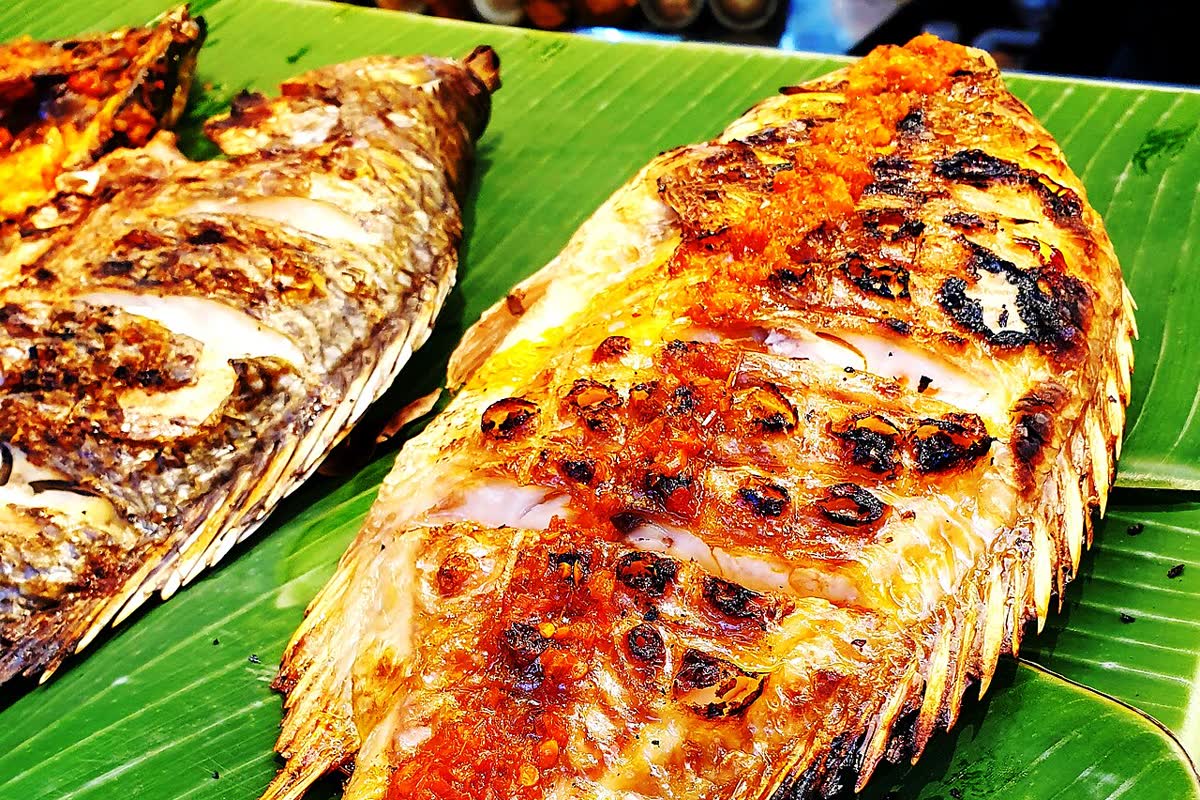
Photo: Phương Huy · CC BY-SA 4.0
The meal to come for is a Thái house table in the basin, at bản Phiêng Lơi near the city entrance when a family is receiving guests. The fish is split, stuffed with mắc khén and herbs, and grilled whole, and the sticky rice comes as a ball you eat by hand. Sơn La is the hearth across Pha Đin, and Mộc Châu is the yogurt morning further east.
Black chicken belongs to Tủa Chùa, and rau ban to March and April on the passes. Duck with banana flower cooks about three hours in banana leaves, so it is a family dish for guests rather than a street plate.
Hearth-dried meat, buffalo, pork, or beef, comes off the fire red and still hot. Kitchen-smoked buffalo hangs longer: Vietnam News describes about 15 hours of smoke, and Vietnamnet a 2–3 hour marinade, a slow charcoal dry, and a 30-minute resteam. Hương Linh – Tủa Chùa tea and Mường Ảng coffee are the provincial products to take home.
Dien Bien Phu specialties
Start with the Thái table, then the tám rice, the hearth, and the provincial specialities to ask a host about.
- Pa pinh top
- Cay pinh
- Upland sticky rice
- Steamed black chicken
- Ban flower
- Bitter bamboo
- Pork grilled in leaves
- Bon soup
- Hearth-dried meat
- Kitchen-smoked buffalo
- Duck with banana flower
- Cabbage-wrapped oleaster
- Cham cheo
- Sau chit
- Muong Thanh tam rice
- Banh day
- Khau cam
- Khau hang
- Khau papa
- Bamboo worms
- Mong wine
- Mountain goat
- Da River fish
Pa pinh top Pa pỉnh tộp
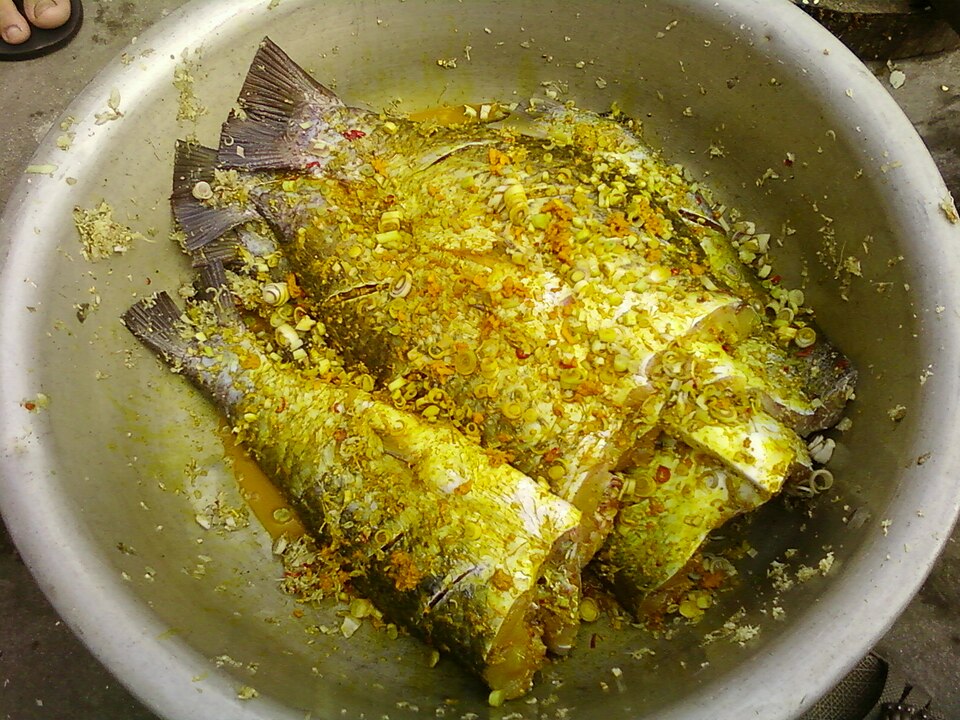
Pa pỉnh tộp is the Thái folded fish: a river fish such as carp, split along the back, stuffed with mắc khén, roasted chilli, spring onion, and herbs, then clamped in bamboo and grilled over charcoal. It comes off golden, sweet and fatty inside, and hot with chilli and the peppery mắc khén.
Cay pinh Cáy pỉnh
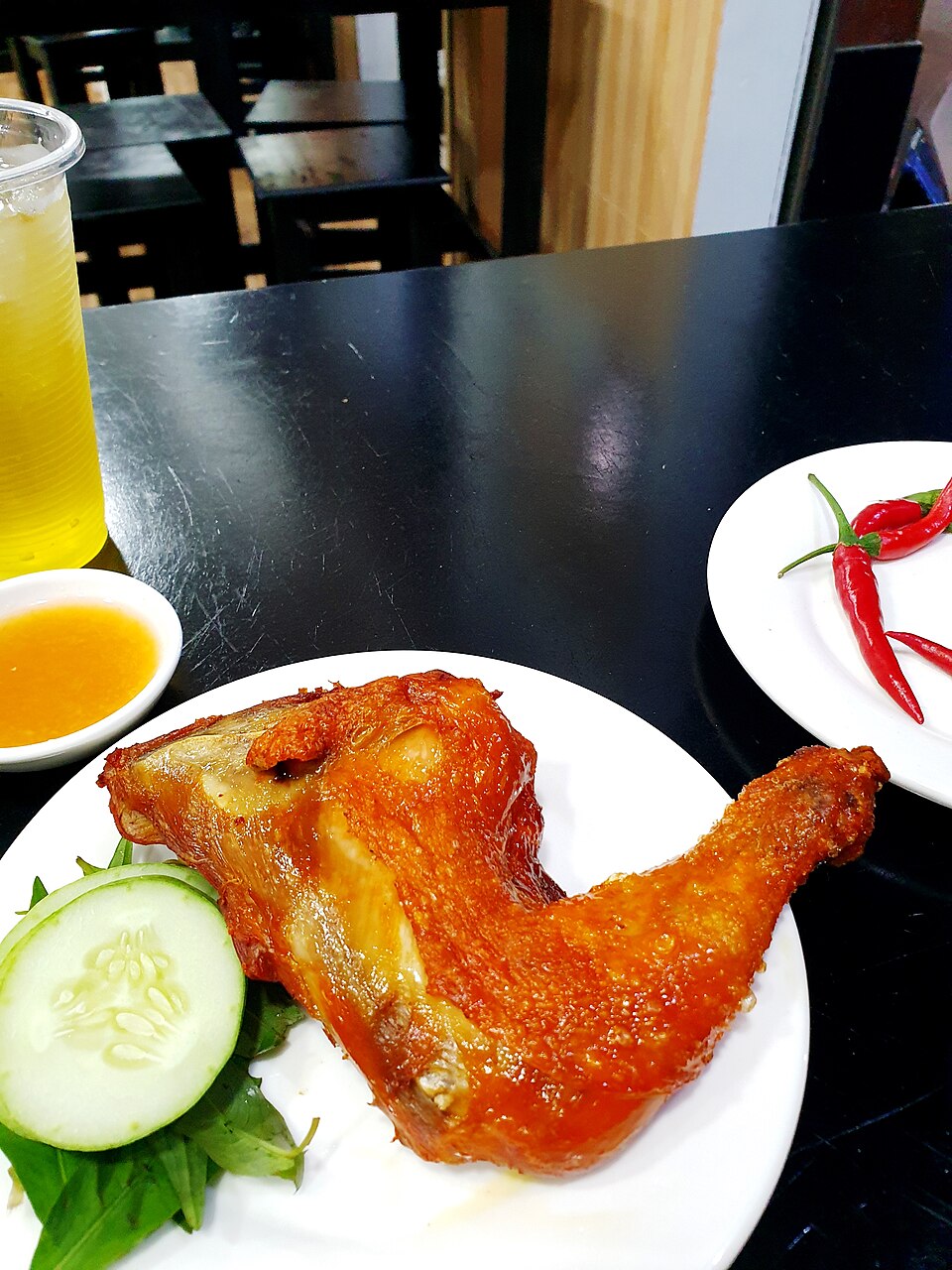
Cáy pỉnh is Thái chicken marinated in local herbs, wrapped in lemongrass leaves, and grilled over charcoal. The skin turns crisp and golden, the meat stays sweet, and the bird smells of mắc khén.
Upland sticky rice Xôi nếp nương
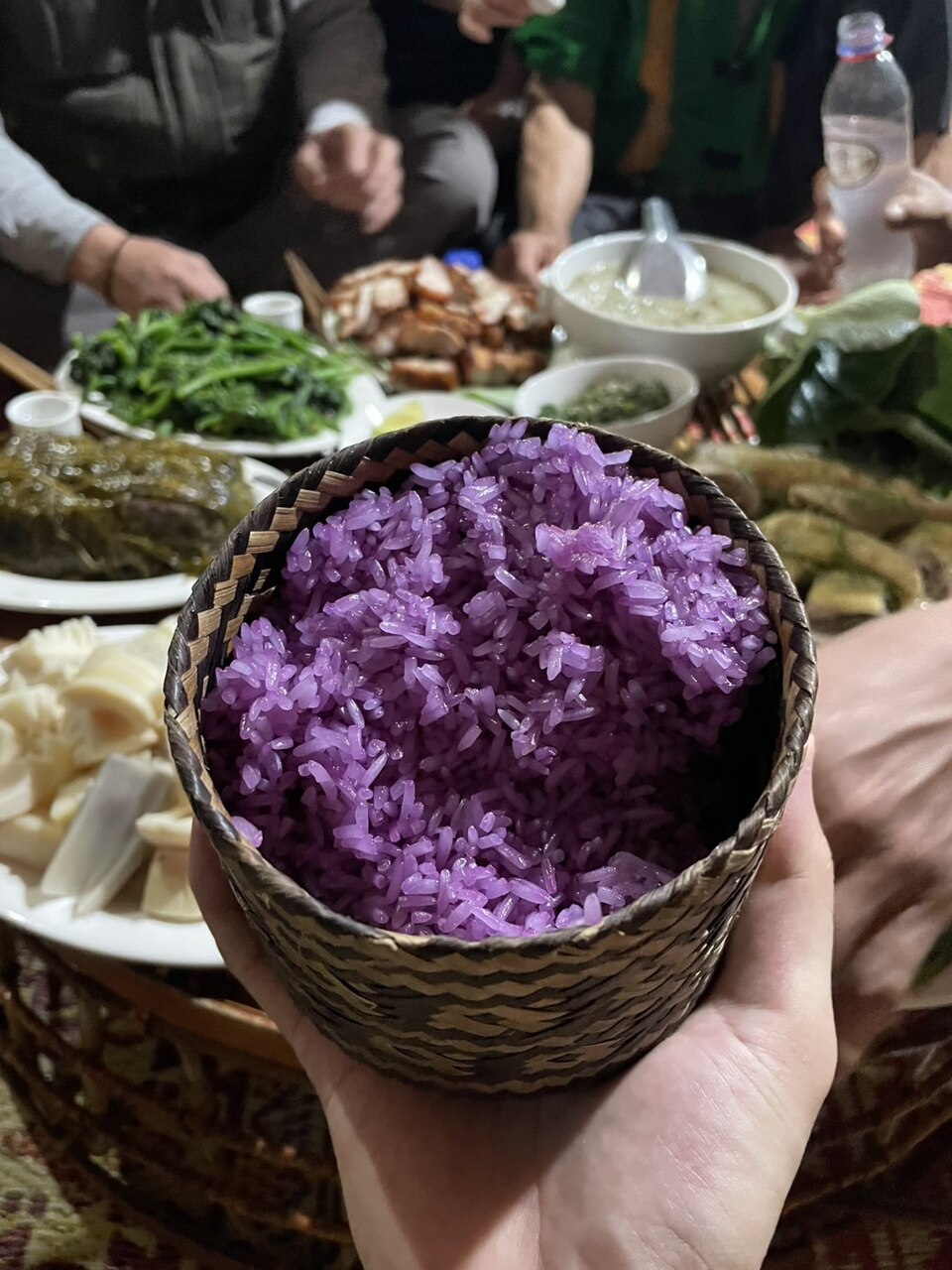
Xôi nếp nương is upland sticky rice steamed twice in a wooden steamer, often coloured red, purple, yellow, and green with leaves, tubers, and fruit. The grains are plump, glossy, soft, and fragrant, and a ball of it leaves your hand clean.
Gà đen hấp is the black-skinned Hmong chicken of Tủa Chùa, seasoned with local herbs, tied with lemongrass leaves, and steamed over charcoal. The meat is sweet, fragrant, and firm.
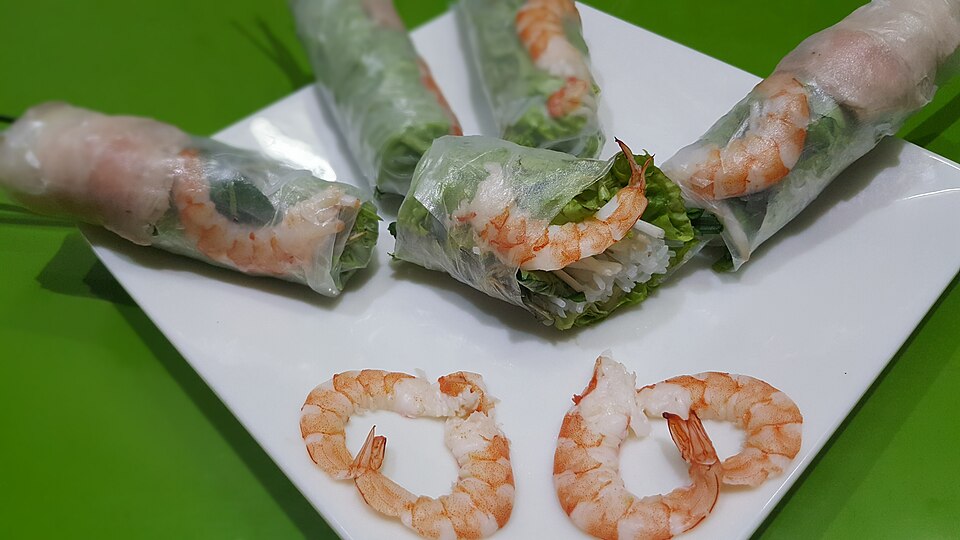
Ban flower Rau ban
Rau ban is the young flower and leaf of the ban tree, picked on the passes in spring and made into salads or stir-fried with meat. The salad is dressed with galangal or sesame, and some cooks add chilli, mắc khén, and wild seeds for an aromatic plate.
Măng đắng is forest bamboo shoot with a sweet-bitter taste that stays however it is cooked. It is boiled and dipped in chẩm chéo, grilled, stewed with bone, stir-fried with fermented rice, or made into a salad.
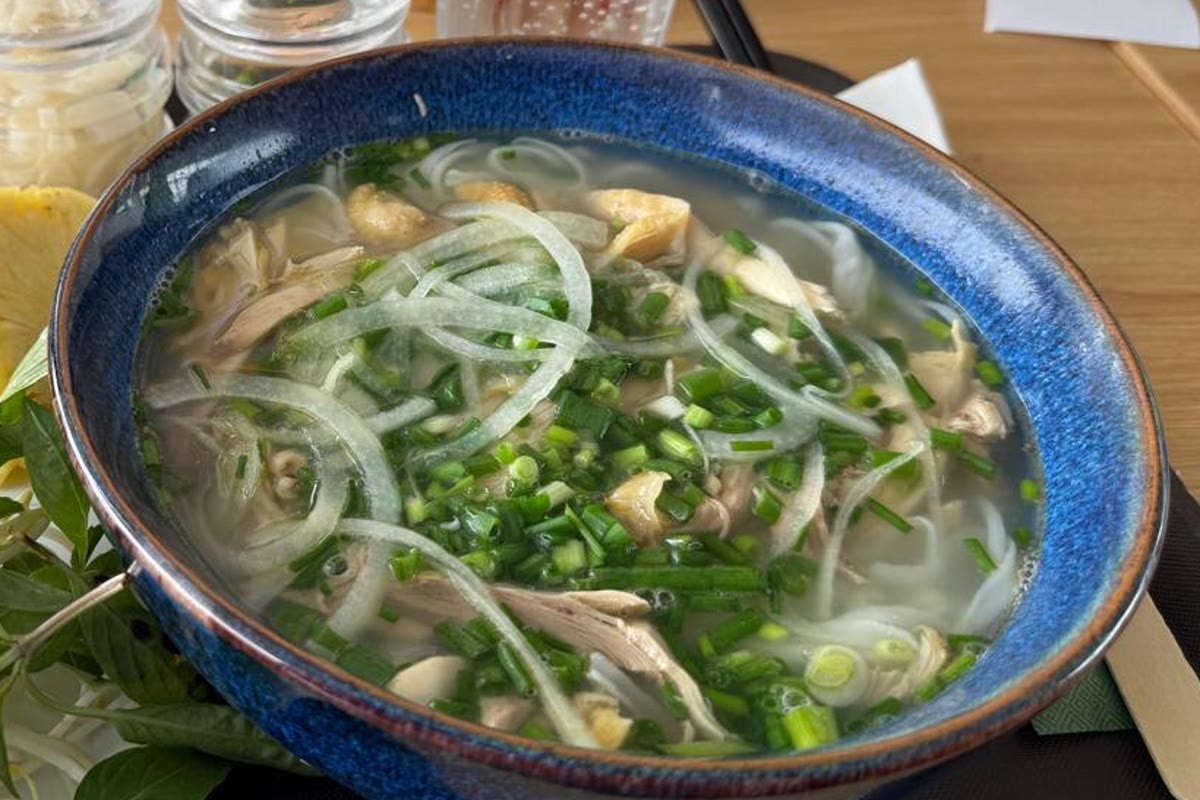
Pork grilled in leaves Nhứa phò
Nhứa phò is minced pork shoulder, lightly seasoned, wrapped in many layers of leaf, and grilled over charcoal. The meat turns yellow and sweet while the outer leaf dries without burning through.
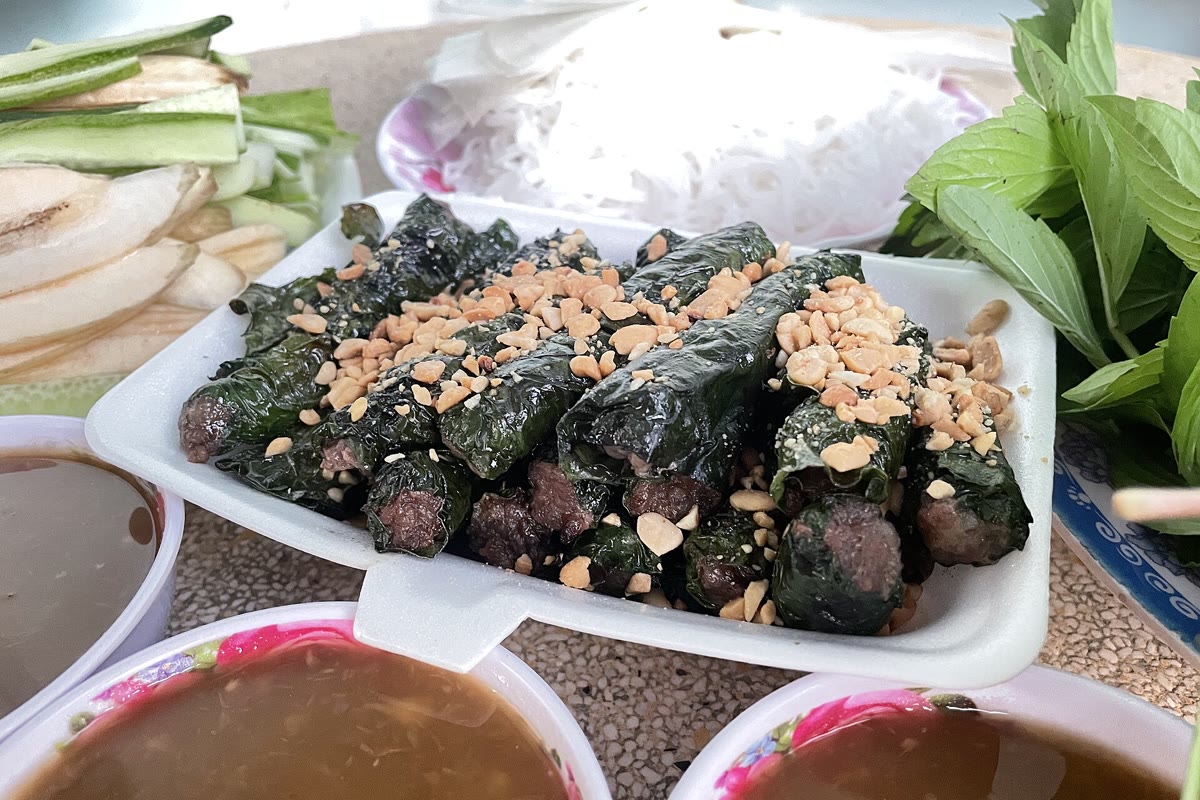
Bon soup Canh bon
Canh bon is a Thái soup of buffalo or beef skin with dọc bon or water taro, wild eggplant or wild tomatoes, herbs, mắc khén, and lemongrass. The skin is fragrant and crisp against the slight bitterness of the wild fruit, warmed by the lemongrass.
Nhứa giảng is buffalo, pork, or beef seasoned and dried over a wood fire. Straight off the fire the strips are red, still hot, and fragrant with meat and a thin smoke.
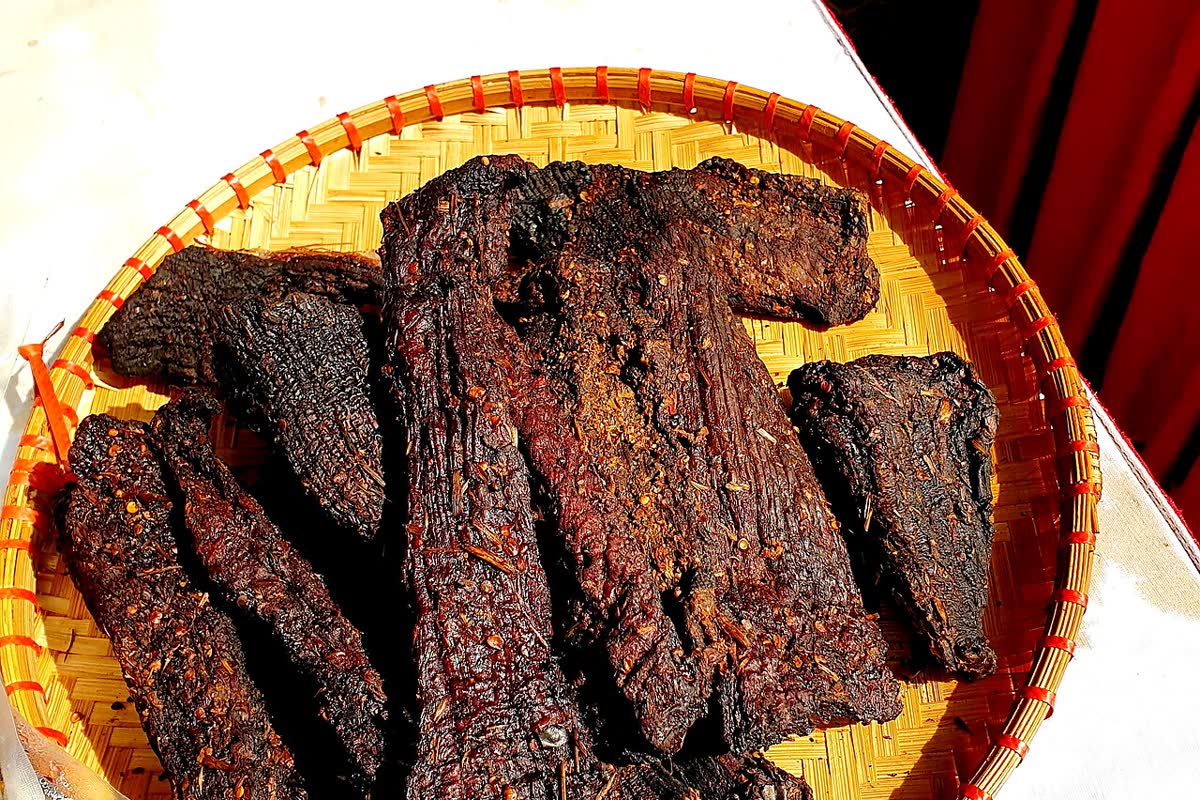
Kitchen-smoked buffalo Thịt trâu gác bếp
Thịt trâu gác bếp is hill buffalo marinated with mắc khén, lemongrass, chilli, and garlic, then hung on bamboo skewers above the kitchen fire until it turns brown-red. Taken off just done, it keeps the sweetness of the buffalo and smells of the mountains.
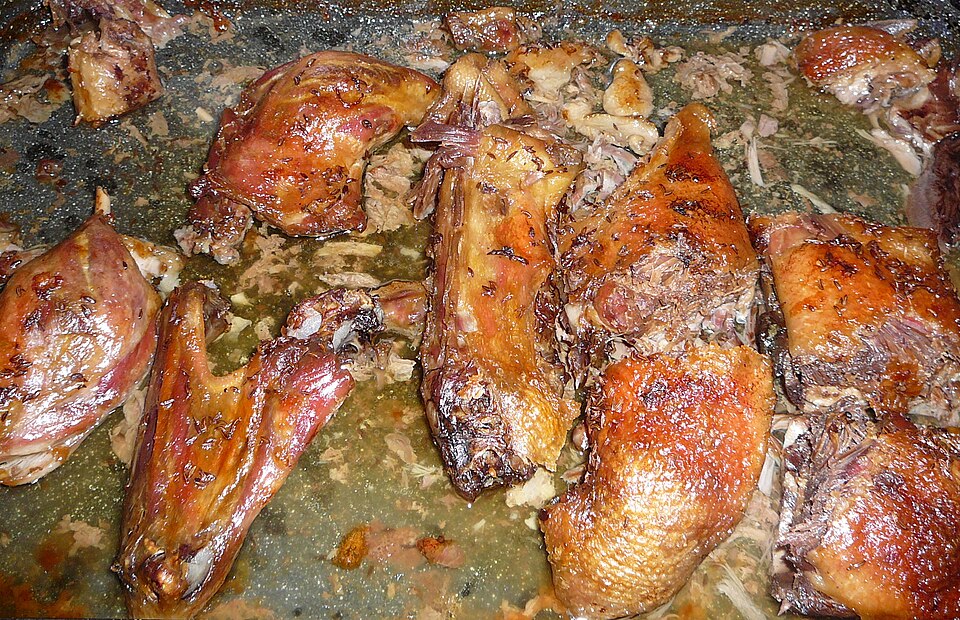
Duck with banana flower Vịt om hoa chuối
Vịt om hoa chuối is duck marinated with mắc khén, chilli or hạt dổi, mixed with sliced banana flower, wrapped in banana leaves, and cooked about three hours over a small fire. The duck is sweet, the forest flower slightly astringent, and the mắc khén brings heat.
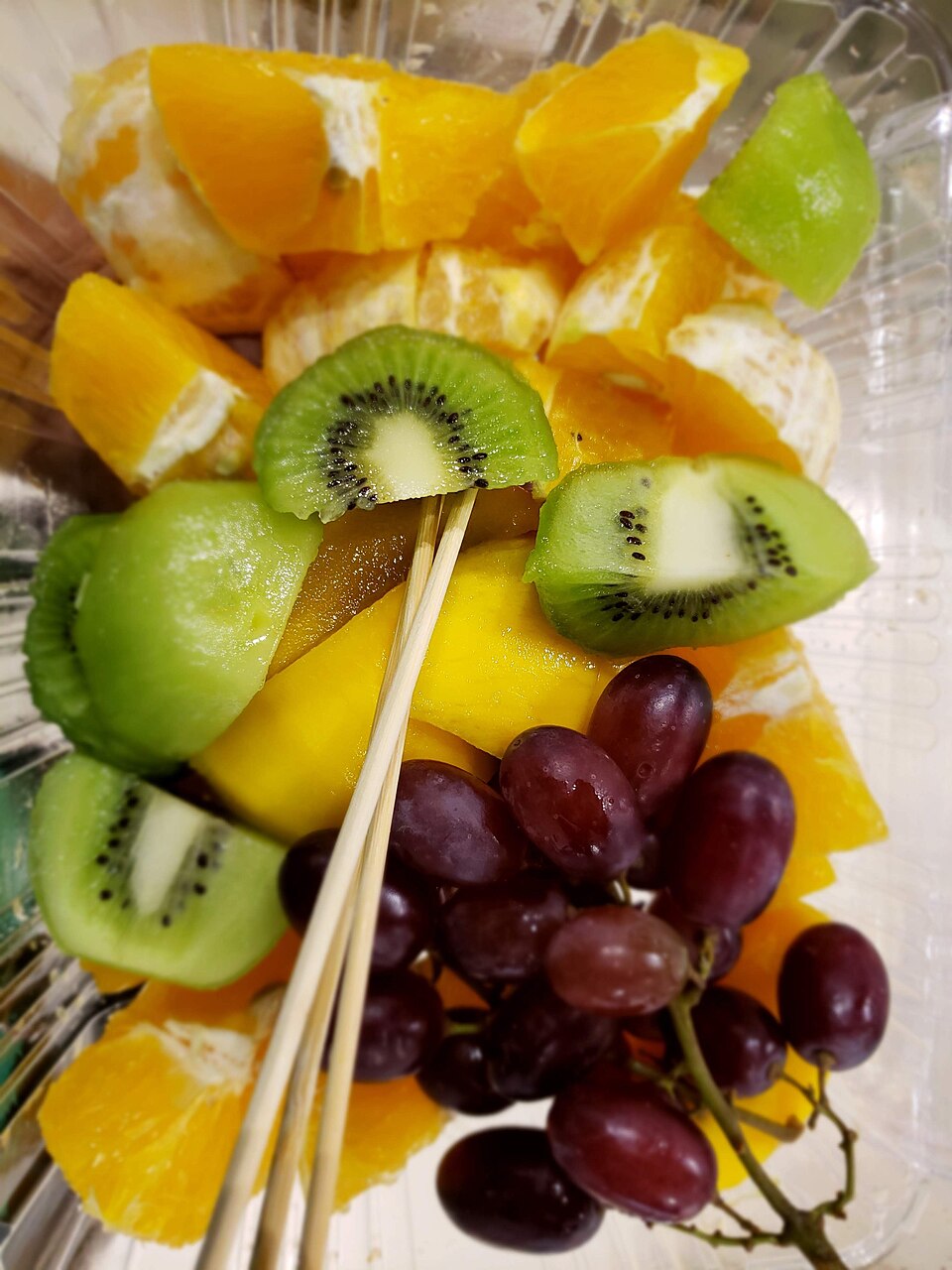
Cabbage-wrapped oleaster Bắp cải cuốn nhót xanh
Bắp cải cuốn nhót xanh is young green oleaster rolled in fresh cabbage, sometimes with ginger, coriander, and garlic leaf, and dipped in chẩm chéo. It has no meat and tastes sour, hot, salty, and fragrant, the acrid cabbage against the tart fruit.
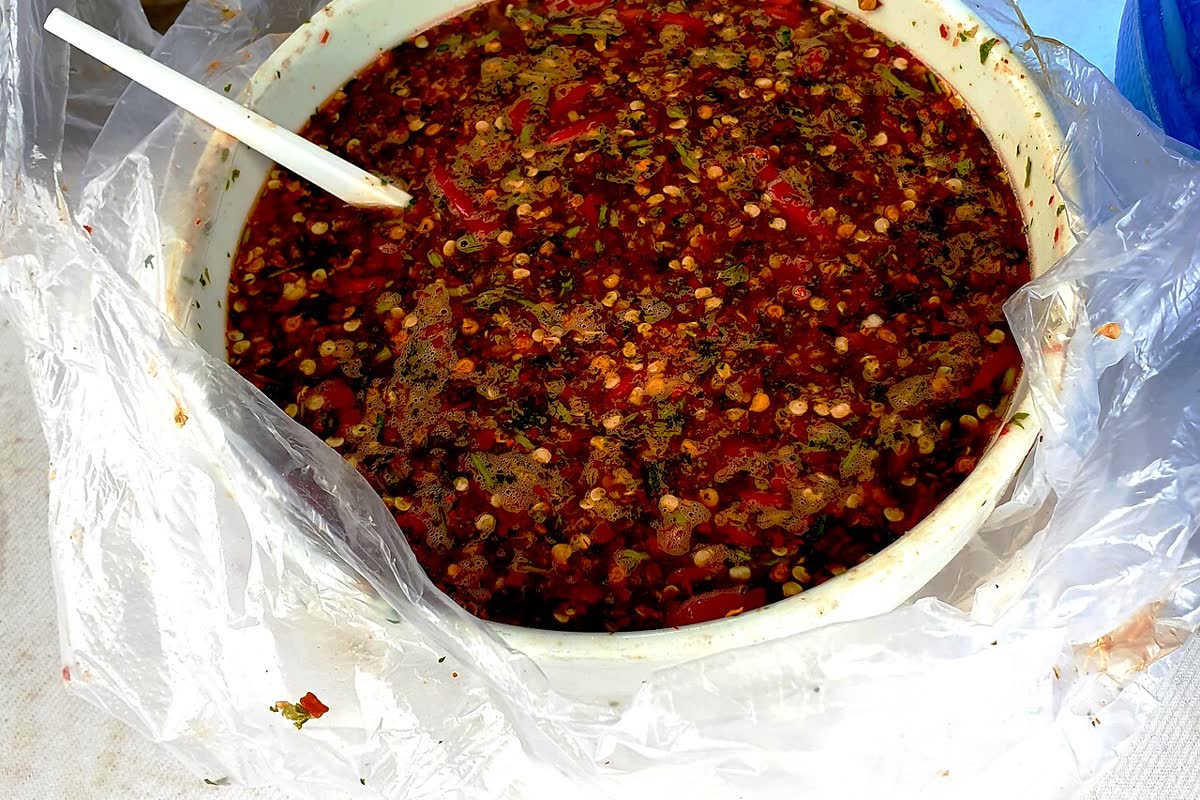
Cham cheo Chẩm chéo
Chẩm chéo is the Thái dipping sauce: mắc khén pounded with dried chilli and salt, then garlic or lemongrass and dried coriander. Its smell is sharp and herbal rather than soft.
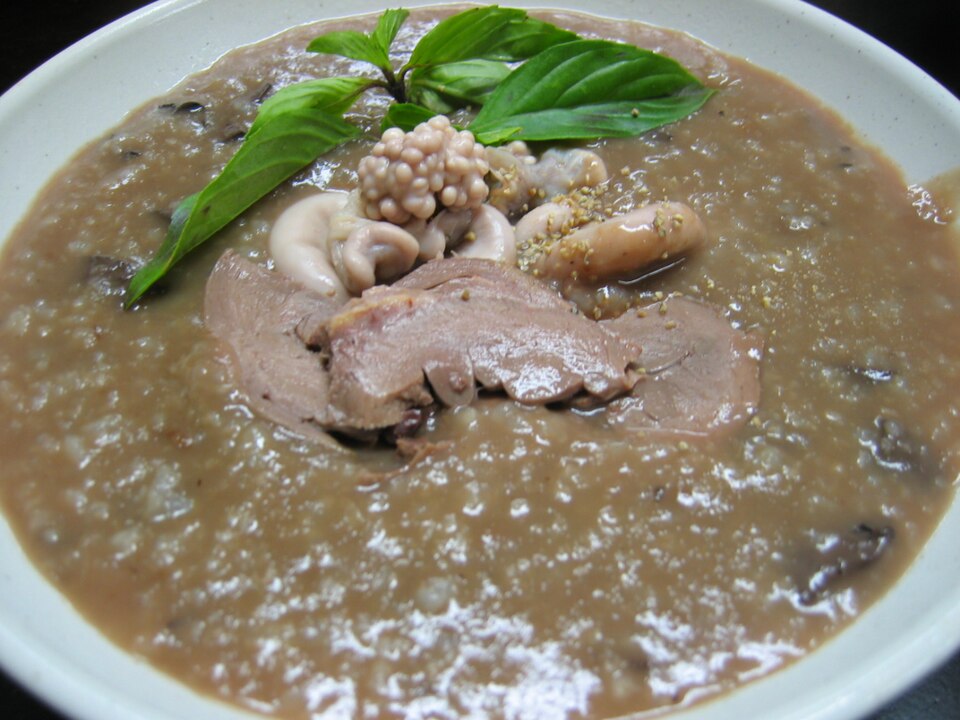
Sau chit Sâu chít
Sâu chít is a plump, milk-white worm taken from the stem of the chít plant. It is kept in weak wine, then steeped into a wine or cooked into porridge.
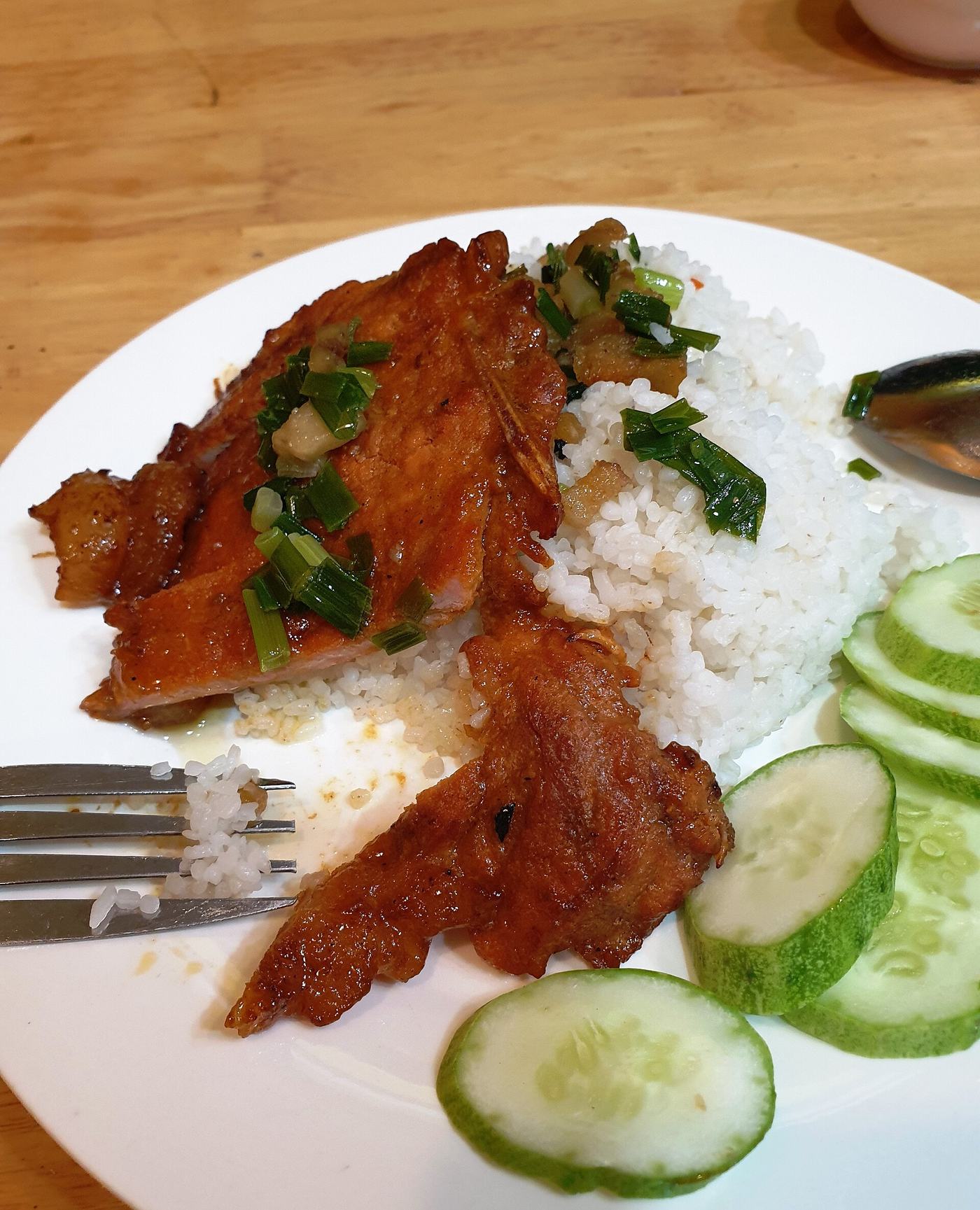
Muong Thanh tam rice Gạo tám Điện Biên
Gạo tám Điện Biên is the small, plump, opaque rice of the Mường Thanh fields. The cooked rice is lightly fragrant and sticky, with a deep taste as you chew.
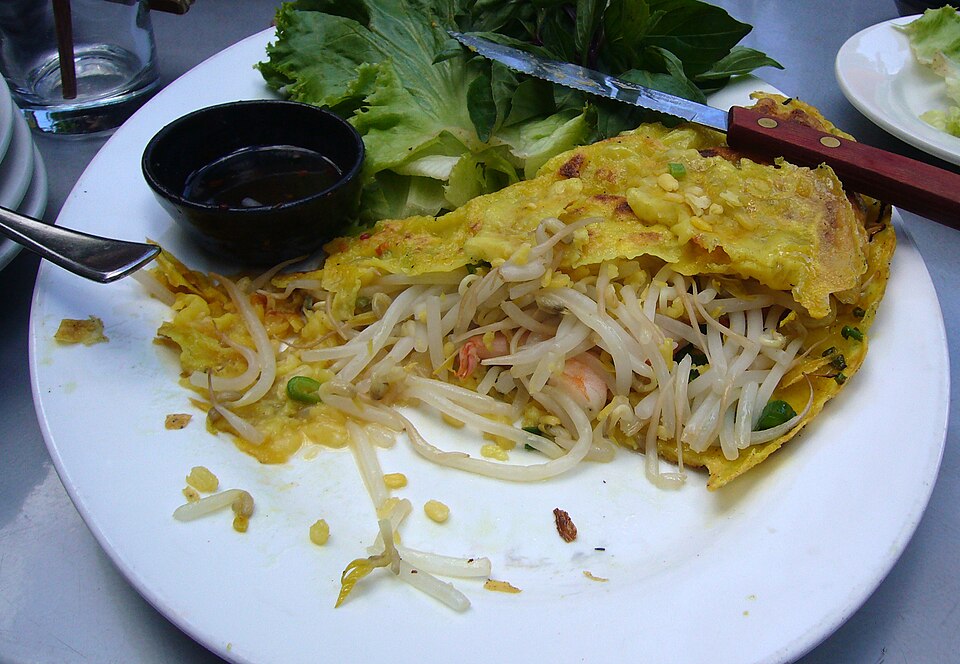
Banh day Bánh dày
Bánh dày is the Mông Tết cake of upland sticky rice, pounded smooth by hand and wrapped in forest dong leaves. It keeps through the cold start of spring and is eaten with chả or giò, grilled over charcoal, or dipped in forest honey.
Khẩu cắm is sticky rice coloured with lá cẩm leaves and made from Mường Thanh tám rice. It is rich, sticky, and fragrant.
Khẩu háng is tám rice steamed in the husk, dried, milled, and then steamed again until done.
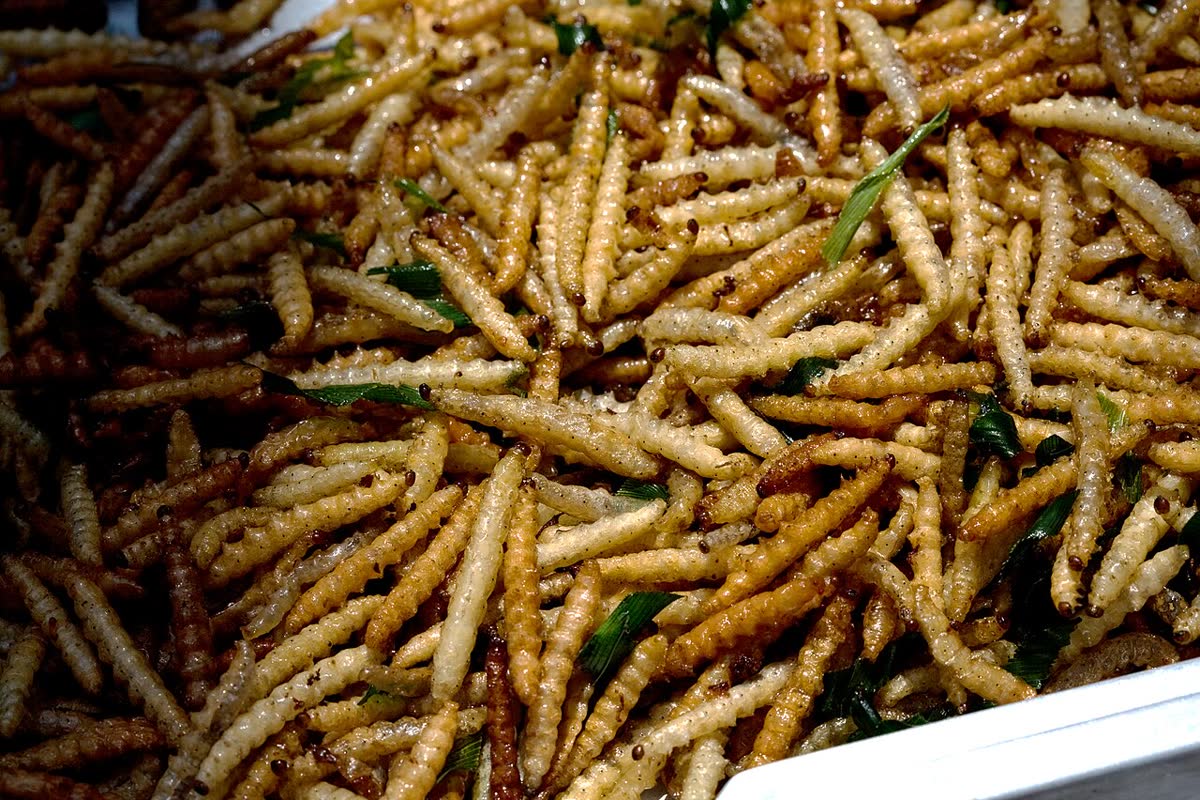
Bamboo worms
Bamboo worms are one of the specialities Điện Biên’s culture director recommends, alongside Mông wine, mountain goat, and Đà River fish.
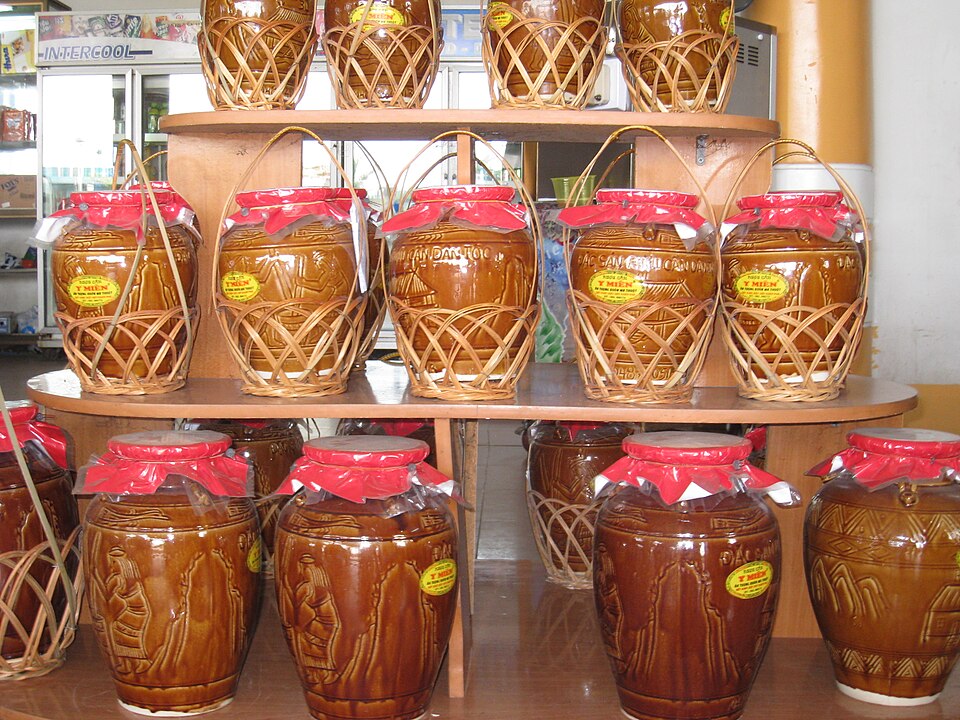
Mong wine
Mông wine is one of the specialities Điện Biên’s culture director recommends, alongside bamboo worms, mountain goat, and Đà River fish.
Mountain goat is one of the specialities Điện Biên’s culture director recommends, alongside bamboo worms, Mông wine, and Đà River fish.
Fish from the Đà River is one of the specialities Điện Biên’s culture director recommends, alongside bamboo worms, Mông wine, and mountain goat.
City specialties
Twenty-three plates, sauces, rice dishes, and drinks from the Thái and Mông tables. For the last four, ask your host how they are cooked.
Bản Phiêng Lơi, at the city entrance
Eat it straight from the grill at a Thái table, with chẩm chéo on the side.
A Thái hamlet that receives guests
Hamlets that receive guests grill it at the fire and pour a cup of rice wine alongside.
The Thái table
Eat it with grilled fish or pork, or carry a packet, cóong xôi, for the road.
Tủa Chùa
A Tủa Chùa dish; the same bird is also roasted with hạt dổi or cooked in a hotpot or porridge.
The passes, in March
Look for it in March and April, when the ban flowers on the passes.
The bitterness is the point: this bamboo is not soaked in salt, so the grilled shoot keeps its bitter, astringent edge.
The Thái table
A Thái plate; eat it hot, straight from the leaf.
The Thái table
A home and hamlet soup for the Thái table.
The highland table
It keeps well, so it is eaten warm with rice or carried on the road.
Some cooks smoke it for about 15 hours; others dry it more briefly over charcoal and resteam it for half an hour.
A family table
Families cook it for guests, adding garlic chives, mint, and coriander near the end.
Eat it as a wrap, with chẩm chéo on the side.
The Thái table
Dip sticky rice, grilled fish, forest meat, boiled bamboo, or cabbage-wrapped oleaster in it.
Order it as the steeped wine or as porridge.
Mường Thanh
The same grain makes khẩu cắm, khẩu háng, and khẩu papa.
A Tết cake; look for it at the new year.
Made from the tám rice of the Mường Thanh fields.
The double steaming starts with the grain still in its husk.
Made from the tám rice of the Mường Thanh fields.
Ask your host how they are cooked that day.
Ask your host what it is made from and how strong it is.
Ask your host which cut is on and how it is cooked.
Ask which fish came in and how it is cooked.
Casual dining
Phố đi bộ Mường Thanh is the river street, Chợ Trung tâm I is the wholesale hall, and bản Phiêng Lơi is a hamlet table rather than a stall row. The 2012 night market on Nguyễn Chí Thanh is a separate street.
Beside the Nậm Rốm, phường Điện Biên Phủ
The walking street beside the Nậm Rốm fills during Ban flower week; outside it, a few drink stalls at the head of the street are the stop. One trader opens weekday afternoons and evenings, and through the day at weekends.
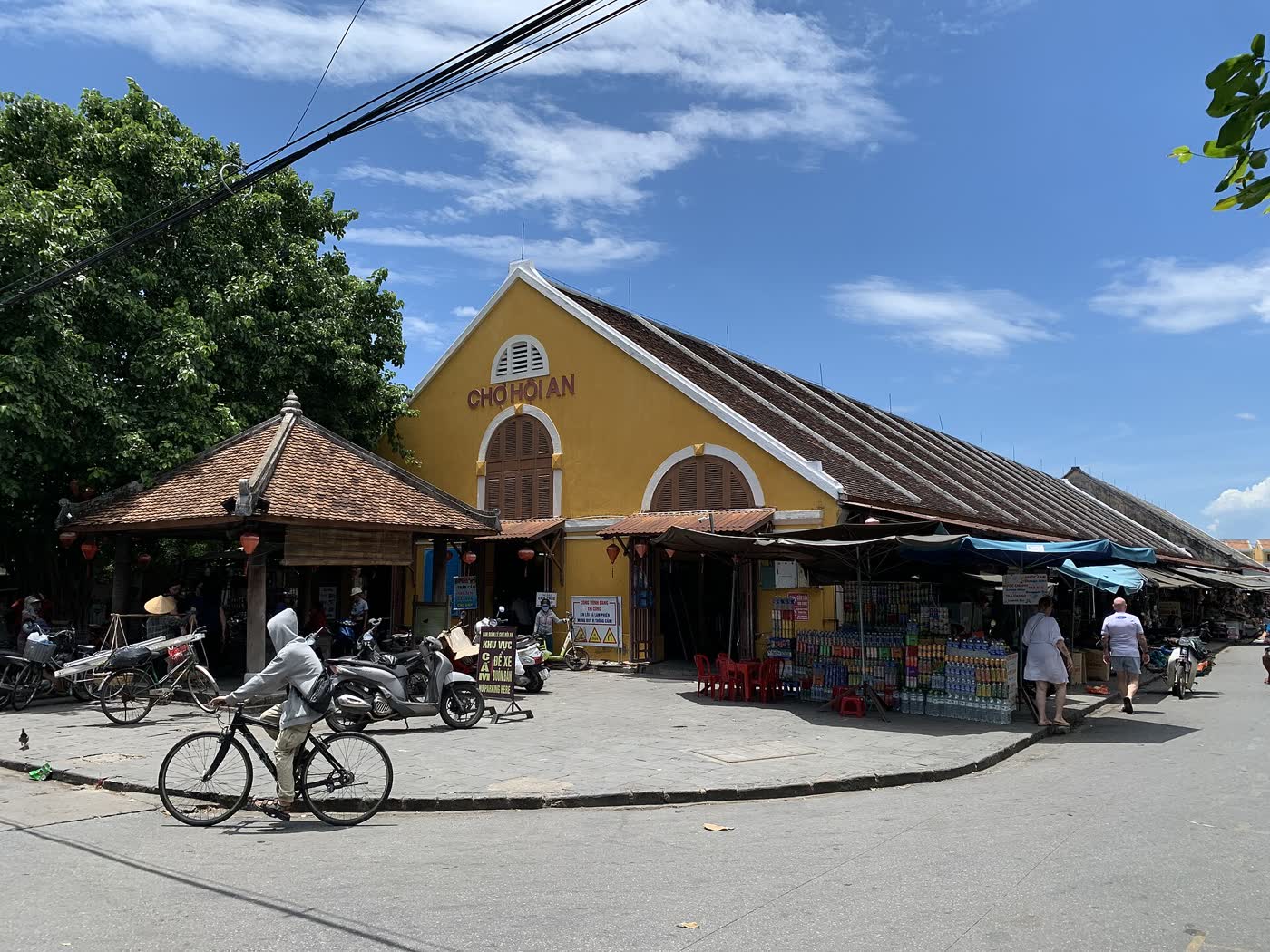
Central Market I Chợ Trung tâm I
Old phường Tân Thanh, now phường Điện Biên Phủ
The city's wholesale market hall, opened in 1992 with about 150 kiosks.
Nguyễn Chí Thanh, as printed in 2012
In 2012 a night market ran daily 20:00–23:30 along Nguyễn Chí Thanh, from the Trần Đăng Ninh junction to the provincial youth-house crossing. Ask locally whether it still opens.
The entrance to the city
A Thái hamlet at the city entrance where houses serve the Thái meal to guests, and a food stop during the flower festival.